Fuses and circuit breakers are essential safety components in solar power systems. They protect wiring from overheating and safeguard connected devices from damage or fire in the event of a short circuit or overcurrent. While a solar system can technically operate without them, the use of fuses or circuit breakers is strongly recommended to ensure safety and system reliability.
A circuit breaker automatically interrupts the flow of electricity when a fault is detected. This prevents excessive heat buildup, equipment damage, and potential fire hazards. In solar applications, a circuit breaker protects both the system and the user by tripping and disconnecting power during abnormal conditions. Solar circuit breakers are commonly used to switch and isolate different types of loads. For transformer-isolated inverters, a bipolar DC circuit breaker or isolator is required and must be rated at least 1.25 times the solar array’s short-circuit current (Isc) and 1.2 times its open-circuit voltage.
Photovoltaic (PV) panels are among the most hazardous components of a solar power system. When connected in series, PV arrays can produce DC voltages ranging from 100V to 500V—or even higher—levels that can be extremely dangerous. Proper safety measures are critical to protect both equipment and personnel. A correctly sized DC circuit breaker plays a vital role in preventing overcurrent conditions, arc faults, and fire risks.
Solar circuit breakers also serve as a critical barrier between direct current (DC) generated by the panels and alternating current (AC) supplied to the home or grid. This isolation is necessary for safe installation, troubleshooting, and routine maintenance. For this reason, electrical codes require the use of appropriate circuit protection in all solar PV systems.
In addition to safety, solar circuit breakers help optimize system performance. They are widely used in both AC and DC applications, allowing system owners to manage multiple circuits, create separate breaker panels, and control current flow. Proper control of current direction is especially important in solar and battery-based systems, as reverse current flow can cause equipment damage and serious safety issues.
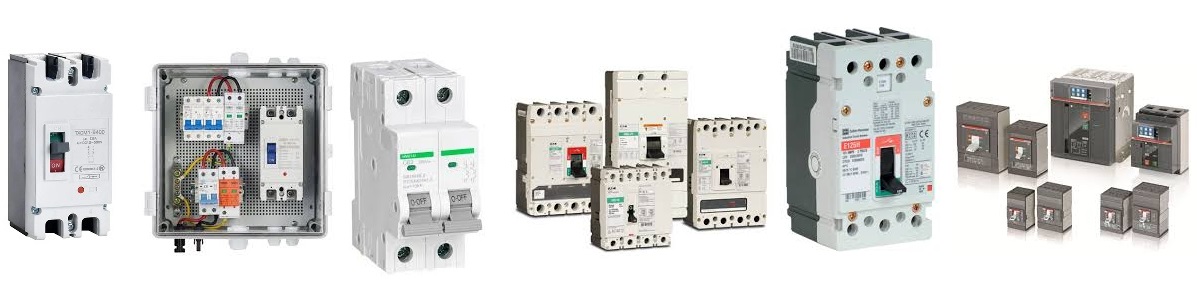
Key Types of Solar Circuit Breakers
Not all solar circuit breakers are the same. Common types used in solar power systems include:
-
Standard Circuit Breakers
Widely used in residential and commercial solar installations, these breakers protect individual circuits and are available in various current and voltage ratings. -
Ground Fault Circuit Interrupters (GFCI)
Designed to protect against electrical shock caused by ground faults. In solar systems, GFCIs detect ground faults and prevent the system from operating when a fault is present. -
Arc Fault Circuit Interrupters (AFCI)
These breakers protect against electrical fires caused by arcing or sparking. Many building and electrical codes require AFCI protection in modern solar installations. -
AC Circuit Breakers
Used on the AC side of the system to protect inverter outputs and AC wiring. Typical ratings include 120V or 240V, depending on the application. -
DC Circuit Breakers
Specifically designed for DC circuits in solar systems, including PV arrays and battery connections. They are commonly used in systems with energy storage and come in a wide range of ratings. -
PV Circuit Breakers
A specialized type of DC breaker designed for solar arrays. They can handle high DC voltages (typically 600V–1000V) and are often built for outdoor, weather-resistant installations. -
Bidirectional DC Breakers
Used in solar systems with battery storage, these breakers handle current flow in both directions—charging batteries from solar panels and discharging energy to the home or grid.
Advanced Solar Circuit Breaker Solutions
Eaton’s DC and PVGard molded case circuit breakers are engineered to meet demanding performance requirements while offering a wide range of accessories to suit different site conditions. Modern DC circuit breakers now support expanded applications, including solar PV systems, electric vehicle charging stations, battery energy storage systems, UPS installations, and commercial or industrial DC distribution.
Miniature Circuit Breakers (MCBs) provide fast, reliable protection against high-current faults. Magnetically protected and available in multiple configurations, MCBs offer near-instant response times and are suitable for protecting primary and secondary circuits in solar installations.