Capacitors
A capacitor (also known as a condenser) is a passive electronic component used to store and release electrical energy within a circuit. It consists of two conductive plates separated by an insulating material known as the dielectric. When a voltage is applied across the plates, an electric field develops, causing positive charge to build up on one plate and negative charge on the other. This stored energy can then be discharged as needed, making capacitors essential for functions such as filtering, energy storage, signal processing, coupling, tuning, rectification, and power conditioning.
Capacitors are found in nearly all electronic and electrical circuits. The conductive plates are typically made of thin aluminum foil, while the dielectric may be composed of materials such as paper, Mylar, polypropylene, ceramic, mica, or even air. In electrolytic capacitors, the dielectric is a layer of aluminum oxide that is formed through the application of voltage after assembly. The performance and characteristics of a capacitor depend on the materials used, as well as the thickness of the dielectric and the physical spacing between the conductive plates.
Showing 1–9 of 882 results
-
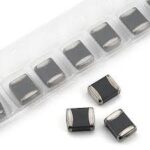
04025A150JAT2A AVX CAPACITOR CERAMIC 15PF 5% 50V C0G SMD 0402
Read more -
04025C471JAT2A AVX Capacitor 470PF 50V 5% X7R SMD 0402
Read more -
04025U5R6BAT2A AVX CAPACITOR CER 5.6PF 50V NP0 0402 RoHS
Read more -
0402YC103KAT2A AVX Capacitor Ceramic 0.01uF 16V X7R 10% SMD 0402 125C T/R
Read more -
06033C223JAT2A AVX Ceramic Capacitor CER 0.022UF 25V SMD 0603
Read more -
06033C473JAT2A AVX Capacitor Ceramic 0.047uF 25VDC 5% SMD 0603
Read more -
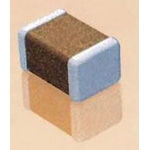
06035A101FAT2A AVX Ceramic Capacitor 100PF 50V SMD 0603
Read more -

06035A221JAT AVX Ceramic Capacitor 220pF 50V NP0 5% SMD 0603
Read more -
06035C222JAT2A AVX Capacitor 2200PF 50V X7R SMD 0603
Read more