Sensors
The primary functions of a sensor include monitoring, feedback, and intelligent control. Sensors monitor conditions by providing data to displays, controllers, or recording devices. They also enable feedback by detecting changes in a phenomenon and allowing systems to adjust and maintain operating parameters within a desired range. In more advanced applications, sensors add intelligence to systems by supplying data that can be processed to support complex, autonomous decision-making.
A sensor is a device that detects physical, chemical, or environmental changes and converts them into electrical signals that can be measured, recorded, or used for control. Sensors are essential in applications such as industrial automation, robotics, HVAC systems, and smart home technologies. They operate by sensing variables like temperature, pressure, motion, or humidity and converting them into electrical outputs such as voltage, current, resistance, capacitance, frequency, or digital data (e.g., I²C, SPI, or 4–20 mA signals). Common sensor types include temperature, pressure, position, level, force, speed, vibration, flow, optical, and humidity sensors. Selecting an appropriate sensor depends on the required output signal and the system’s ability to process or amplify that signal.
Showing 1–9 of 64 results
-
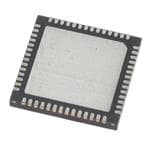
10-022260-0A2, QFN56.K2 Cirque Tough Sensor 3-3.6V 13.1mA 56LGA
Read more -
1135 PRECISION VOLTAGE SENSOR MEASURES -30V TO +30V 10mS INPUT: 5VDC 3.6 mA RoHS
Read more -
191-212 Hakko Replacement Sensor
Read more -
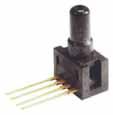
26PCDFA6G Honeywell Sensing and Control Pressure Sensor 30psi
Read more -
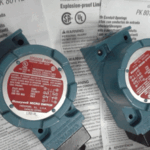
3455R-99030010 HONEYWELL PHENOLIC AUTO RESET THERMOSTAT 7.2A (277V), 15A (120V)
Read more -
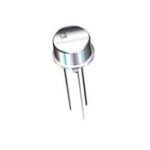
5962-8757104YA Analog Devices Temp Sensor Analog TO-52-3
Read more -

9P-P3005-010 AMTOUCH 6.55″ PCI SENSOR WITH 1.1MM DRAGONTRAIL GLASS RoHS
Read more -
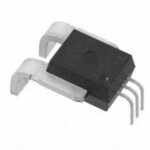
ACS758KCB-150B-PFF-T Allegro Current Sensor 150A 5V BI 5-CB
Read more -
ACS758LCB-100U-PFF-T Allegro Current Sensor 5V 5-Pin CB-PFF
Read more