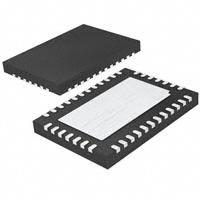
Description
AR8031-AL1B Qualcomm Ethernet Transceiver PHY 10Mbps/100Mbps/1Gbps 3.3V 48-Pin QFN RoHS
Technical Details
Mfr Qualcomm
Package Tray
Type Transceiver
Protocol Ethernet
Number of Drivers/Receivers 1/1
Duplex Full
Voltage – Supply 3.3V
Mounting Type Surface Mount
Package / Case
48-WFQFN Exposed Pad
Supplier Device Package
48-QFN (6×6)
Receiver Hysteresis 25 mV
Max Operating Temperature 85C
Min Operating Temperature -40C
Receiver Hysteresis 25mV
RoHS Compliant No
Simplex/Duplex Full Duplex
Taxonomy Path Semiconductor > Communication > Protocols and Networks > PHY
Datasheet:AR8031-PB-Atheros.pdf
The AR8031 is part of the Arctic family of devices — which includes the AR8031, AR8033, and AR8035. The AR8031 is Atheros’ 4th generation, single port, 10/100/1000 Mbps, Tri- speed Ethernet PHY. It supports both RGMII and SGMII interfaces to the MAC. The AR8031 provides a low power, low BOM (Bill of Materials) cost solution for comprehensive applications including enterprise, carrier and home networks such as CPE, home gateway, enterprise switch, carrier switch/router, mobile base station and base station controller, optical module and media converter, industry automation and measurement. The AR8031 integrates Atheros Green ETHOS ® power saving technologies and significantly saves power not only during the work time, but also overtime. Atheros Green ETHOS® power savings include ultra-low power in cable unplugged mode or port power down mode, and automatic optimized power saving based on cable length. The AR8031 also supports IEEE 802.3az EEE standard (Energy Efficient Ethernet) and Atheros proprietary SmartEEE. SmartEEE allows legacy MAC/SoC devices without 802.3az support to function as a complete 802.3az system. Further, the AR8031 supports Wake-on-LAN (WoL) feature to be able to help manage and regulate total system power requirements. The AR8031 embeds CDT (Cable Diagnostics Test) technology on-chip which allows customers to measure cable length, detect the cable status, and identify remote and local PHY malfunctions, bad or marginal patch cord segments or connectors. Some of the possible problems that can be detected include opens, shorts, cable impedance mismatch, bad connectors, termination mismatch, and a bad transformer. The AR8031 requires only a single, 3.3V power supply. On-chip regulators provide all the other required voltages. It integrates the termination R/C circuitry on both the MAC interfaces (RGMII/SGMII) and the serial resistors for the line side. The AR8031 device also incorporates a 1.25 GHz SerDes. This interface can be connected directly to a fiber-optic transceiver for 1000 BASE-X /100 BASE-FX mode or to MAC device for SGMII interface.