The Inductor
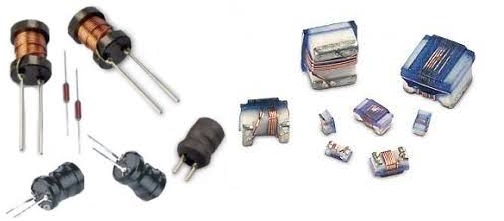 An Inductor is a passive electrical component consisting of a coil of wire which is designed to take advantage of the relationship between magentism and electricity as a result of an electric current passing through the coil. Inductors are made with wire tightly wrapped around a solid central core which can be either a straight cylindrical rod or a continuous loop or ring to concentrate their magnetic flux. An inductor is a component in an electrical circuit which stores energy in its magnetic field. It can release this almost instantly. Being able to store and quickly release energy is a very important feature and that’s why we use them in all sorts of circuits.
An inductor is a passive electronic component that stores energy in the form of a magnetic field when an electric current flows through it. It is typically composed of a coil of wire wound around a core made of ferromagnetic material. The basic principle behind an inductor’s operation is electromagnetic induction.
Surface mount (SMD) inductors are placed on the top of a printed circuit board (PCB) on pads with solder paste, and then reflow soldered. Through hole inductors are mounted to the top of a PCB with the leads fed through via holes in the board, and then wave soldered on the backside.
Here are some key characteristics and aspects of inductors:
- Inductance: Inductance is the fundamental property of an inductor and is a measure of its ability to store magnetic energy. It is denoted by the symbol “L” and is measured in henries (H). The inductance value determines how the inductor responds to changes in current flowing through it. Higher inductance values indicate a greater ability to store energy.
- Construction: Inductors are typically constructed by winding a conductive wire, usually copper or aluminum, into a coil. The coil may be wound around a core made of different materials, such as iron, ferrite, or air. The core material affects the inductor’s inductance, saturation characteristics, and frequency response.
- Magnetic Field: When an electric current flows through the coil, a magnetic field is created around it. The strength of the magnetic field is proportional to the current flowing through the inductor. As the current changes, the magnetic field changes, and this change induces a voltage across the inductor according to Faraday’s law of electromagnetic induction.
- Energy Storage: Inductors store energy in the magnetic field when a current is flowing through them. When the current through an inductor changes, the energy stored in the magnetic field is released or absorbed. This property allows inductors to oppose changes in current, acting as a kind of “flywheel” that resists rapid changes.
- Impedance: Inductors exhibit impedance to the flow of alternating current (AC). The impedance of an inductor, denoted by the symbol “Z,” depends on its inductance and the frequency of the current passing through it. The impedance of an inductor increases with frequency, causing inductors to resist changes in current more effectively at higher frequencies.
In what applications are inductors used?
Applications: Inductors have numerous applications in electronic circuits. They are commonly used in power supplies, filters, oscillators, transformers, electric motors, and various RF (radio frequency) and communication systems. Inductors are essential components in many electronic devices, helping to control current, filter out noise, and store energy.
Inductors are primarily used in electrical power and electronic devices for these major purposes:
- Choking, blocking, attenuating, or filtering/smoothing high frequency noise in electrical circuits
- Storing and transferring energy in power converters (dc-dc or ac-dc)
- Creating tuned oscillators or LC (inductor / capacitor) “tank” circuits
- Impedance matching
Inductors
- API Delevan*
- AEM*
- Cal-Chip*
- Chilisin *
- CoilMaster *
- Etal/Profec*
- Dale*
- Delevan
- Fastron *
- IBS inductors
- IQD
- Gowanda*
- JW Miller
- Johanson Technology
- Mag Layers*
- Renco Electronics
- TDK
- Samwha *
- Siga Transformers*
- Tai-Tech *
- Toko *
- Walsin *
- Yageo*
-
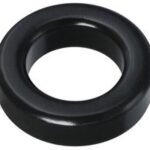
020491-01-D5005 TORROID 10.5uH 25%
-
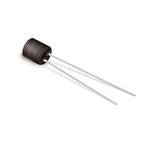
037.513 Kaschke General Purpose Inductor 100uH 1.2A CYLINDRICAL RADIAL 2WIRE
-
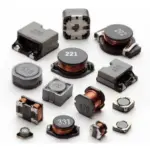
0603CS-R12XJLW Coilcraft Fixed Inductor 120nH 5 % 0.3A SMD 0603
-
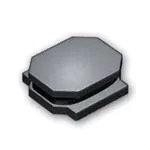
1264EY-6R8M=P3 Murata Wirewound Inductor 6.8uH 20% 3.4A SMD 2424
$0.00 Add to cart -
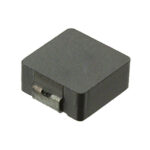
1269AS-H-100N=P2 Murata Shielded Inductor 10uH 30% 0.68A SMD 1008
$0.00 Add to cart -

1269AS-H-R47M=P2 Murata Shielded Inductor 0.47uH 3.1A SMD 1008
$0.00 Add to cart -
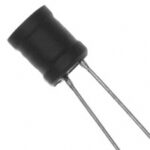
13R103C Murata Fixed Inductor 10uH 3A Radial
-
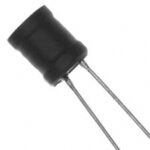
13R105C Murata Fixed Inductor 1.0mH 0.33A Radial
-
13R472C Murata Fixed Inductor 4.7uH 4.3A Radial
-
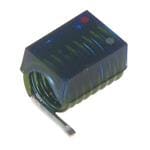
1812SMS-33NJLB Coilcraft Inductor 33nH 5 % 3A SMD 1812
-
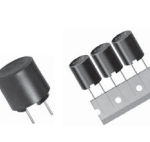
22R154C Murata Inductor 150uH 0.52A
-
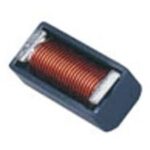
31499-05 VICOR 1 ELEMENT INDUCTOR 47.4uH, SMD 0803
-
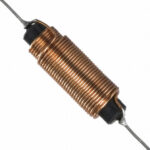
5219-RC BOURNS/JW MILLER INDUCTOR CHOKE 4.9uH 20% 15A
-
6-1624108-2, TE Fixed Inductors 5.9nH +/-0.2nH 3640 SMD 0402
-
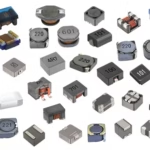
744042004 Wurth Inductor 4.7UH 1.72A SMD
-
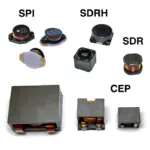
744053180 Wurth Inductors 18uH 1.25A .088Ohm SMD 5828
-
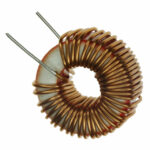
744106 Wurth Toroidal Inductor 393uH 1.1A Radial, Vertical (Open)
$3.63 Add to cart -
744107 Wurth Toroidal Inductor 557uH 1.1A Radial, Vertical (Open)
$4.48 Add to cart -
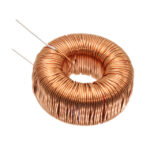
7441110 Wurth Toroidal Inductor 1.619 mH 1.8A Radial, Vertical (Open)
$3.54 Add to cart -
744117 Wurth Toroidal Inductor 390uH 2A Radial, Vertical (Open)
$4.16 Add to cart -
744118 Wurth Toroidal Inductor 600uH 2.2A Radial, Vertical (Open)
$5.69 Add to cart -
744119 Wurth Toroidal Inductor 890uH 2A Radial, Vertical (Open)
$8.27 Add to cart -
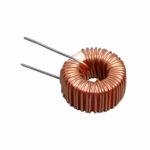
744131 Wurth Toroidal Inductor 34uH 5.2A Vertical, No Base, 2 PC Pin
$3.72 Add to cart -
744135 Wurth Toroidal Inductor 157uH 5.1A Radial, Vertical (Open)
$5.71 Add to cart
- Etal Transformers

- Pulse Engineering

- Sumida

- Tamura

- Midcom / Wurth